
Jacob Deceives Isaac for the Blessing
(Genesis 27:1-40)
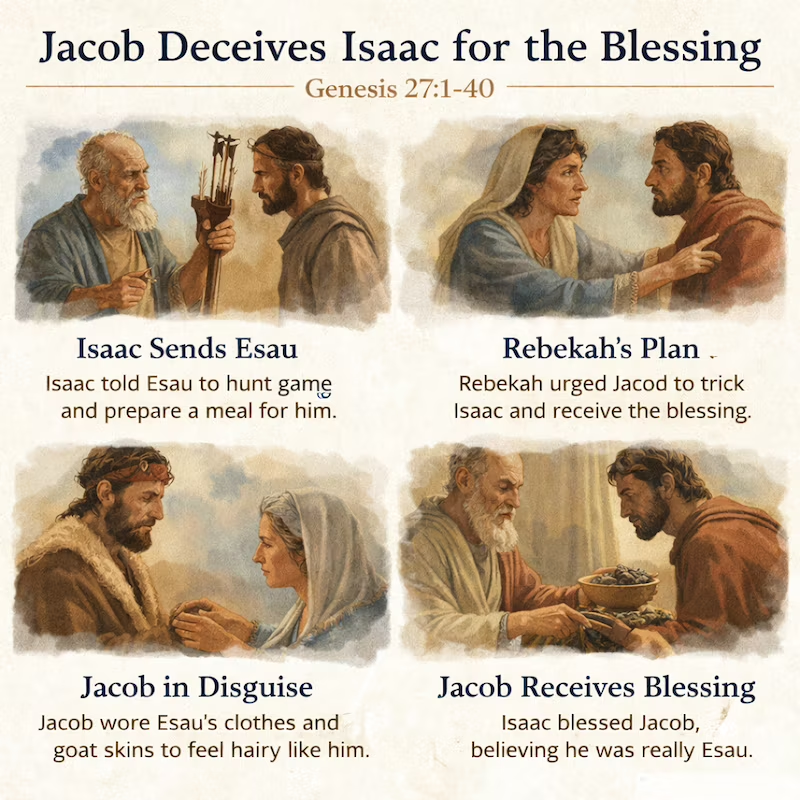
Isaac, the son of Abraham, was very old. His eyes had grown so weak that he could barely see. He knew it was time to pass on the special family blessing, so he called his older son, Esau. "My son," Isaac said, "I am old and do not know when I will die. Take your bow, go hunt some wild game, and prepare my favorite meal. After I eat, I will give you my blessing."
Isaac's wife, Rebekah, was listening to every word. She loved her younger son, Jacob, and she wanted him to receive that blessing instead. She rushed to Jacob and told him her plan. "Go to the flock and bring me two young goats. I will cook them into a meal just the way your father likes. Then you will bring it to him and he will bless you instead of Esau."
Jacob was worried. "My brother Esau is a hairy man," he said, "but my skin is smooth. If my father touches me, he will know I am a fake and I will get a curse, not a blessing."
Rebekah insisted. "Let the curse fall on me, my son. Just do as I say." So Jacob obeyed. Rebekah cooked the goat meat to taste like wild game. She dressed Jacob in Esau's best clothes, which smelled like the outdoors. Then she wrapped the hairy goat skins around Jacob's hands and the smooth part of his neck.
Jacob walked in to his blind father carrying the food. "My father?" he said. "Who is it, my son?" Isaac asked. "I am Esau, your firstborn," Jacob lied. Isaac was confused. "How did you find the game so quickly?" Jacob told another lie: "The Lord your God helped me."
Isaac still felt uneasy. "Come closer so I can touch you." Jacob stepped forward. Isaac felt the hairy goat skins on his hands and said, "The voice is the voice of Jacob, but the hands are the hands of Esau." Because his eyes could not see, Isaac was fooled. He ate the meal, kissed Jacob, and gave him the full blessing of the firstborn son.
Right after Jacob left the tent, Esau arrived home from his hunt. He prepared his father's favorite meal and brought it in. "Sit up, my father, and eat so you can bless me." Isaac trembled all over. "Who are you?" he cried. "I am Esau, your firstborn!" Isaac realized the terrible truth. "Your brother came with trickery and has taken your blessing."
Esau let out a loud, bitter cry. "Bless me too, my father!" he begged. But the blessing could not be taken back. Esau was so angry that he planned to kill Jacob as soon as their father died. Even though Jacob and Rebekah used lies and trickery, God's plan was still accomplished. God had already declared before the twins were born that the older would serve the younger (Genesis 25:23). God can use even the bad choices of people to carry out His good and perfect plan.
A Curious Question
Jacob lied, dressed up in a costume, and pretended to be his brother to get the blessing. But God had already promised the blessing would go to Jacob before the boys were even born. So why do you think Jacob and Rebekah felt like they needed to cheat to get something God had already planned to give them?
Jesus Connection
Jacob was an imposter. He put on someone else's clothes, covered his skin, and pretended to be someone he was not, all to receive a blessing he did not earn. Think about that. Jacob got the blessing through deception, not because he deserved it.
We are a lot like Jacob. We do not deserve God's blessing either. We sin, we lie, we try to get our way. But here is where the story turns beautiful: Jesus is the true and perfect Firstborn Son, as Colossians 1 tells us. He never lied. He never cheated. He never needed a disguise. He lived a completely perfect life, and then He gave up His life on the cross to take the curse that we deserve. Because of what Jesus did, God does not look at us and see our sin. He looks at us and sees the righteousness of His Son. We receive God's blessing not by trickery or hard work, but by grace through faith in Christ. Jacob had to scheme and lie to get the blessing. We simply have to trust Jesus, who already earned it for us.
Discussion Questions
- Jacob lied to his father twice in this story. Why do you think it is so easy to tell one lie and then have to keep lying to cover it up?
- Even though Jacob and Rebekah sinned, God's plan still came true. Does that mean God was happy with their lying? What is the difference between God allowing something and God approving of it?
- Jacob tried to earn the blessing through a trick, but Jesus gives us God's blessing as a free gift. Which way sounds better to you, and why?
"So What?" What Can I Do?
Jacob and Rebekah did not trust God to keep His own promise. They thought they had to help God with their own sinful plan. Because Jesus already earned the blessing for us, we can live differently. Here are three ways:
- Tell the Truth: The next time you are tempted to lie to get something you want, stop and remember this story. Lies always lead to more lies. Ask God for courage to speak the truth, even when it is hard. His followers walk in the light.
- Trust God's Timing: Jacob and Rebekah were in a rush. They did not wait for God to work. If you are waiting for something important, practice saying this prayer: "God, I trust Your plan and Your timing. I do not need to cheat or rush." Then wait. He is faithful.
- Rest in Grace: You do not have to "trick" God into loving you or blessing you. He already loves you because of Jesus. This week, when you mess up, go to God honestly. Tell Him what happened. He will not turn you away.
Memorize God's Word
"The Lord detests lying lips, but He delights in people who are trustworthy." ~ Proverbs 12:22
Hand Motions:
- The Lord detests: Shake your head "no" with a serious face and cross your arms in an X.
- lying lips: Put one finger over your lips and wag it side to side.
- but He delights: Place both hands over your heart and smile big.
- in people who are trustworthy: Reach out and shake hands with a friend (or shake your own hands together) to show trust.
Praying with Kids
Dear Father, thank You that Your plan is perfect and that You are always in control. We are sorry for the times we try to get our own way by lying or tricking people, just like Jacob and Rebekah did. Please forgive us. Help us to always speak the truth and to trust in Your promises instead of our own schemes. Thank You for sending Jesus, the true Firstborn, who gives us a blessing we could never earn on our own. We love You. In the name of Jesus, Amen.
Craft or Activity
"Hairy Hands" Truth Reminder
This craft gives children a tactile reminder of Jacob's disguise and the important truth that God delights in honesty, not trickery.
Materials Checklist:
- Trace and Cut: Have each child trace both of their hands onto the construction paper. Cut out the two hand shapes carefully.
- Add the "Hair": Glue small pieces of yarn or craft fur onto the hand cutouts to make them look hairy, just like Esau's hands.
- Write the Verse: On the palm side of one hand, use a marker to write the memory verse: "The Lord detests lying lips, but He delights in people who are trustworthy" (Proverbs 12:22).
- Connect Them: Punch a hole at the top of each hand and tie them together with a short piece of yarn or ribbon.
- Take It Home: Hang the "Hairy Hands" on a doorknob or mirror as a daily reminder to choose honesty over trickery.
Effective Teaching Techniques
This story is full of drama, so use it. Before class, gather two different textures for a sensory moment: a piece of smooth fabric and a piece of faux fur or a fuzzy stuffed animal. When you reach the part where Isaac says, "The voice is Jacob's voice, but the hands are the hands of Esau," let the children close their eyes and feel both textures. Ask them: "Could you tell the difference?" This makes the deception feel real and personal.
Use distinct voices for each character. Give Isaac a slow, tired, old voice. Make Rebekah sound urgent and whispery. Let Jacob sound nervous and unsure. When Esau comes back and discovers the truth, raise your voice with genuine shock and sadness. The more the kids hear the emotions, the more they will understand the weight of what happened.
For younger children (ages 4 to 6), keep the focus simple: lying is wrong, and God always knows the truth. Skip the deeper questions about sovereignty and focus on the prayer and the craft. For the craft, pre-cut the hand shapes and the yarn pieces to save time and let younger kids focus on gluing and talking about honesty.
Frequently Asked Questions
- Why did Rebekah help Jacob trick his father?
- Rebekah loved Jacob and wanted him to receive the blessing that God had already promised would go to him, but instead of trusting God's plan, she and Jacob tried to make it happen through deception.
- How did Jacob fool his blind father Isaac?
- Jacob wore Esau's clothes so he would smell like his brother and wrapped goat skins around his hands and neck so he would feel hairy like Esau, tricking Isaac's senses since he could not see.
- Did Jacob and Rebekah's lie stop God's plan?
- No, even though their lying was sinful and had painful consequences, God's plan that the older would serve the younger still came true, showing that God can accomplish His purposes even through people's mistakes.