
Esau Sells His Birthright
(Genesis 25:19-34)
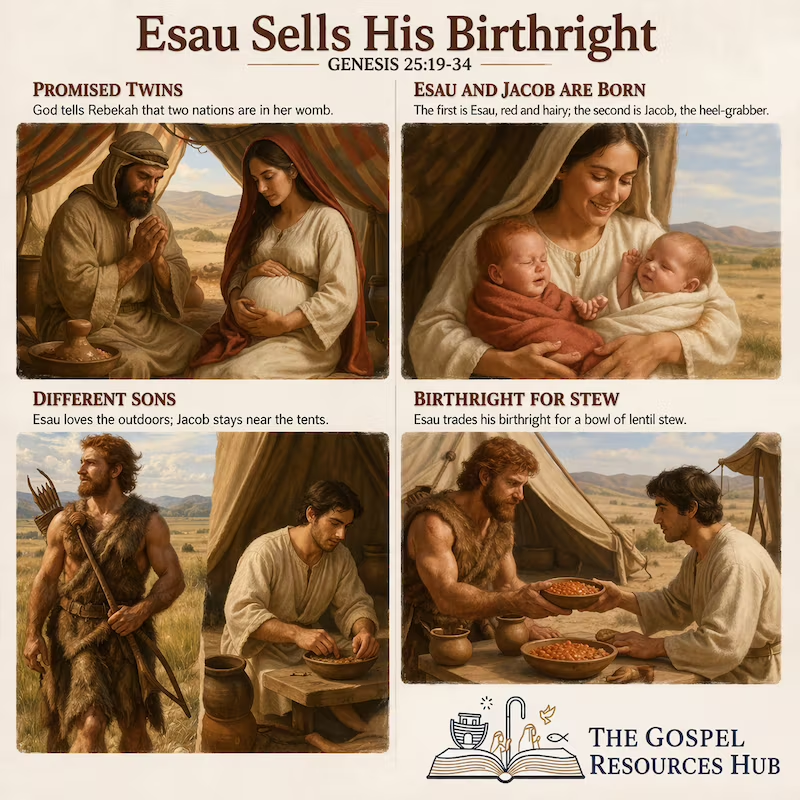
Isaac was the son of Abraham, and God had promised Abraham that through his family, a great nation would come and bless the whole world. Isaac married a woman named Rebekah. For many years, Rebekah could not have children, so Isaac prayed to the Lord for her. God is kind and powerful, and He answered their prayer. Rebekah was going to have twins.
The babies wrestled and tumbled inside her so much that she asked God what was happening. God told Rebekah something surprising: "Two nations are in your womb. One people will be stronger than the other, and the older shall serve the younger."
When the babies were born, the first one came out red and hairy, like he was wearing a little fur coat. They named him Esau. Right behind him came the second baby, and his tiny hand was grabbing onto Esau's heel. They named him Jacob, which sounds like the word for "heel-grabber."
As the boys grew up, they became very different. Esau loved the outdoors. He became a skillful hunter, a man of the open country. Jacob was quieter and preferred to stay near the tents. Their father, Isaac, loved Esau because he enjoyed eating the wild game Esau brought home. Their mother, Rebekah, loved Jacob.
One day, Jacob was cooking a tasty pot of red lentil stew. Esau came in from the field, and he was absolutely exhausted and starving. He said to Jacob, "Quick, give me some of that red stuff. I am so hungry I could die!"
Jacob saw his chance. He said, "I will give you some, but first, sell me your birthright." The birthright was an incredible treasure. It meant Esau, as the oldest son, would receive a double share of everything when his father died. More importantly, it meant he was the one who would carry on God's special promise to Abraham and Isaac. It was the most valuable gift he possessed.
Esau shrugged and said, "Look, I am about to die of hunger! What good is a birthright to me?" He did not care about God's amazing future blessings. He only cared about his hungry stomach right then. So Esau swore an oath and sold his birthright to Jacob for one bowl of lentil stew and some bread. Then he ate and drank, got up, and walked away like nothing happened.
The Bible tells us that by doing this, Esau despised his birthright. He treated God's amazing future promises like they were worth less than a simple bowl of soup.
A Curious Question
Esau had something incredibly valuable: God's promise for his future. He traded it all away for a single bowl of soup because he was hungry right then. Have you ever wanted something so badly right now that you forgot about something way more important later?
Jesus Connection
The birthright was not just about money or land. It carried God's promise that the Savior of the world would one day come through this family. Esau threw away that incredible future for a quick meal. He chose what felt good in the moment over what God had planned for eternity.
We do the same thing. We trade God's best for something small and temporary every time we choose sin over obedience. But here is the good news: Jesus never made that trade. In Matthew 4, Satan tempted Jesus in the wilderness and offered Him all the kingdoms of the world, and Jesus said no. He chose His Father's plan instead. And then Jesus did something even more amazing. He willingly gave up His own life on the cross, not to get something for Himself, but to buy back what we lost. Because of Jesus, we receive a birthright we could never earn: forgiveness, a place in God's family, and eternal life. That is grace. We get God's best not by working for it or scheming for it, but by simply trusting in what Jesus already did.
Discussion Questions
- Why was the birthright so valuable? What did it include besides extra wealth? (Hint: it carried God's promise that the Savior would come through this family.)
- Esau said he was "about to die," but he was not really dying. He was just very hungry. Can you think of a time when something felt so urgent that you made a bad choice you regretted later?
- Jesus was tempted to take a shortcut too, but He chose God's plan instead. How does knowing that Jesus never gave in to temptation help you when you are tempted?
"So What?" What Can I Do?
Because Jesus gave everything to win us a birthright we do not deserve, we can practice valuing God's promises above our "right now" wants. Here are three ways to live that out this week:
- Stop and Think: The next time you are tempted to grab something quick (like being mean to get your way, or cheating to win a game), pause for five seconds and ask yourself: "Am I trading something important for a bowl of stew?" That short pause can change your whole decision.
- Thank God for the Big Stuff: Before bed one night this week, name three promises God has given you that are way better than anything you could buy or eat: like His love, His forgiveness, and His promise to always be with you.
- Be an Encourager: If you see a friend about to make a quick, bad choice, be brave enough to say, "Hey, think about it first." Sometimes we all need someone to remind us that God's plan is worth waiting for.
Memorize God's Word
"See to it that no one falls short of the grace of God... that no one is sexually immoral or unholy like Esau, who sold his birthright for a single meal." ~ Hebrews 12:16-17
Hand Motions:
- See to it: Put your hand above your eyes like you are looking into the distance.
- that no one falls short: Reach one hand up high, then let it drop down low.
- of the grace of God: Point both index fingers up to heaven and smile.
- who sold his birthright: Hold one hand out like you are giving something away.
- for a single meal: Pretend to scoop food from a bowl into your mouth.
Praying with Kids
Dear Father, thank You for the amazing, lasting promises You have given us through Jesus. We are sorry for the times we act like Esau and chase after something small and temporary instead of trusting Your plan. Help us to see that Your gifts are worth more than anything this world can offer. Thank You that Jesus never traded away Your plan, and that because of Him, we get to be part of Your family forever. Teach us to wait patiently and to treasure what really matters. In the name of Jesus, Amen.
Craft or Activity
"Stew vs. Stars" Choice Cup
This simple craft gives children a hands-on way to remember that God's promises are always worth more than a quick fix.
Materials Checklist:
- Decorate the Outside: Give each child a paper cup. Have them write "God's Promises" on the outside and cover the cup with gold star stickers. These stars represent the eternal blessings God offers us.
- Cut the "Stew": Have the children cut small, irregular "lentil" shapes from the red construction paper.
- Fill the Cup: Drop the red paper lentils into the cup. Explain that the red paper inside represents the temporary thing Esau chose.
- Ask the Big Question: Hold up the cup and ask: "Would you trade a cup covered in stars and full of God's promises for a handful of paper lentils?" Let the kids shout their answer.
- Take It Home: Have the children place the cup on their desk or nightstand as a daily reminder to choose God's best over a quick fix.
Effective Teaching Techniques
Before you read the story, try a quick "Would You Trade?" game. Hold up two items: something small and temporary (like a single piece of candy) and something big and valuable (like a new book or a gift card). Ask the kids, "Who would trade the big thing for the small thing?" They will all say no. Then tell them that is exactly what Esau did, and watch their eyes go wide.
When you get to Esau's moment of decision, slow your voice way down. Let the room get quiet. Then read his words in a rushed, careless tone: "What good is a birthright to me?" The contrast between the silence and the careless voice helps kids feel the weight of what Esau threw away. For younger children (ages 4 to 6), focus on the simple truth that Esau traded something amazing for something tiny. Skip the deeper questions about the Messianic line and keep the application to: "God's gifts are the best gifts. Let's not throw them away."
For the memory verse, practice the hand motions at least three times during the lesson: once when you introduce the verse, once after the Jesus Connection, and once right before dismissal. Repetition with movement helps elementary learners lock it in.
Frequently Asked Questions
- What was a birthright and why did it matter so much?
- A birthright meant the oldest son would receive a double share of the family inheritance and would carry on God's covenant promise, making it far more valuable than any ordinary possession.
- Why did Esau sell his birthright for a bowl of stew?
- Esau was so focused on his hunger in that exact moment that he cared more about satisfying it right away than about the eternal promises the birthright represented.
- What does it mean that Esau "despised" his birthright?
- It means Esau treated something extremely valuable, God's covenant promise for his future, as if it were worth almost nothing, choosing a quick meal over it instead.